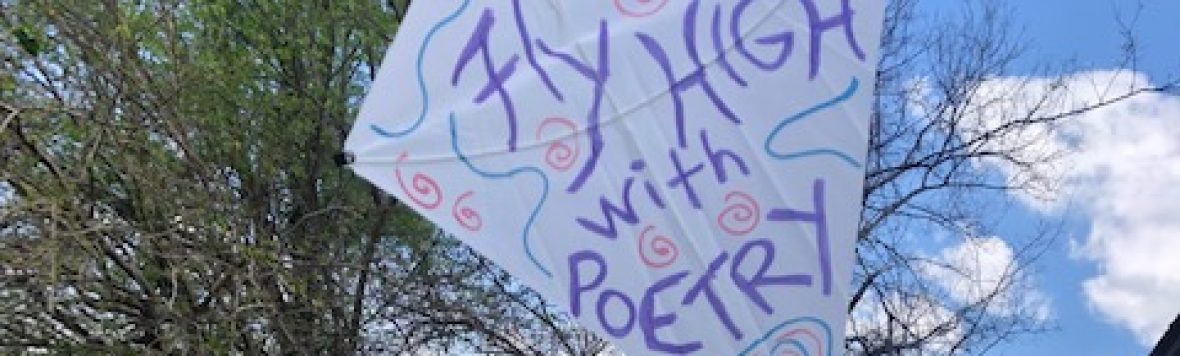
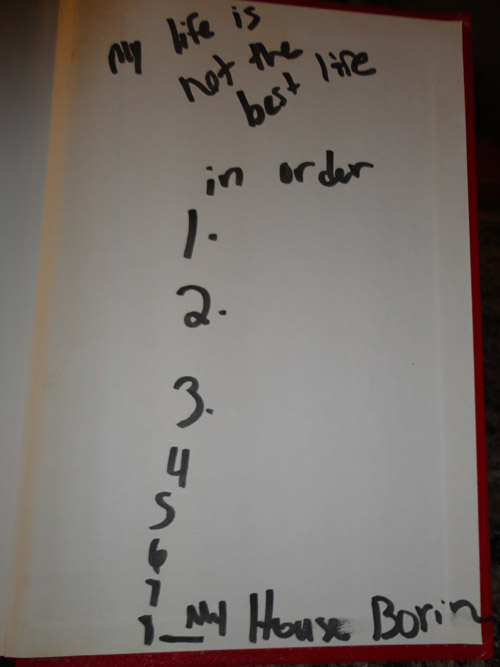
 One of our museum’s exhibits is going to be devoted to marginalia. I am a sucker for an old book with some interesting written comments in the margins. I don’t care what the book is about, but if the person writing in its margins and inside covers sounds interesting, I buy it.
Category: Musings
Musings on poetry and such
Perversion & Vitamin Deficiency
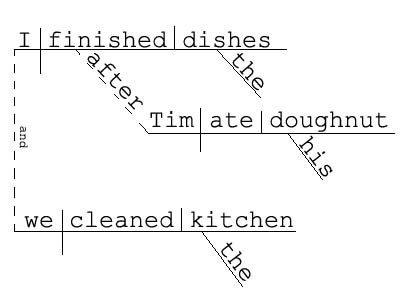 He “subscribed to the theory that the liberal use of adverbs and adjectives was the mark of a pervert or someone with a vitamin deficiency.”
This line about a newspaper editor from Carlos Ruiz Zafon’s The Angel’s Game is an example of two things that I think poetry must do: surprise and balance. Though Zafon’s book is a novel, like many novels, it is full of poetic lines . . . and in this case–poetic insight. At the same time, he surprises the reader, he also offers a balance of ideas.
The Teasdale Treehouse
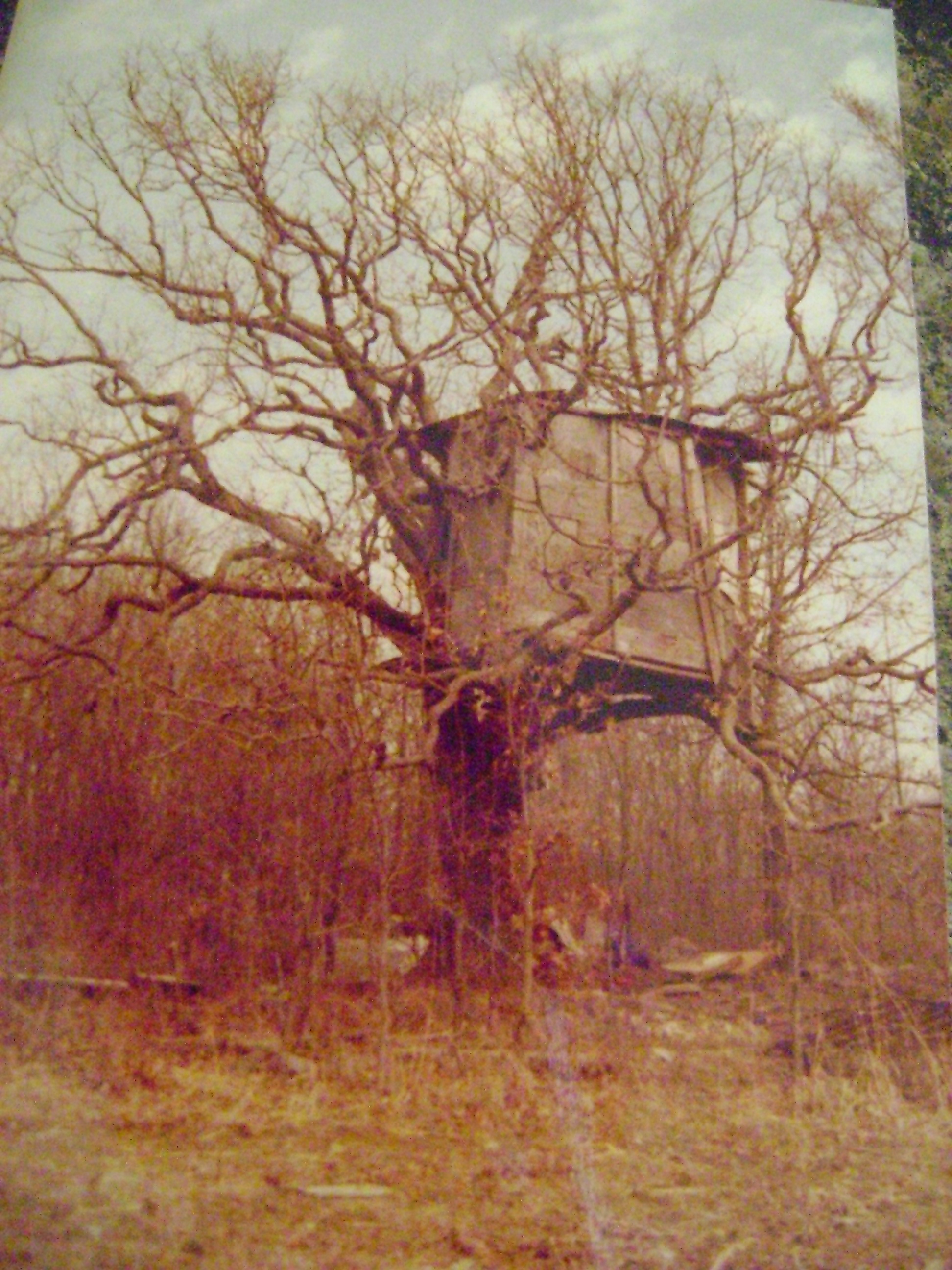

Next to the future home of the Rural Oklahoma Museum of Poetry is a oak tree that is over 100-years-old. In it is a treehouse that is 40-years-old. Continue reading “The Teasdale Treehouse”
Autograph
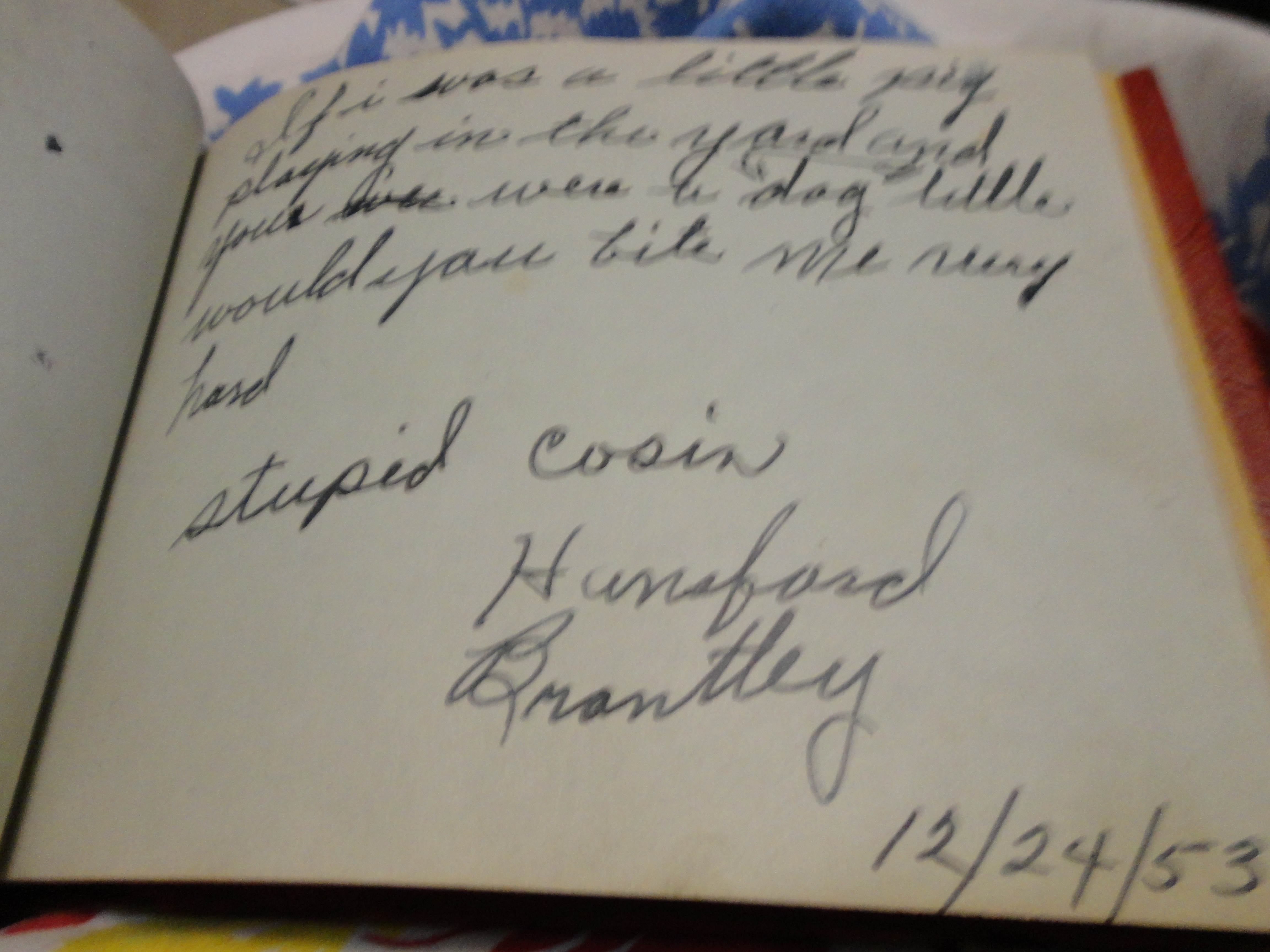 I was looking for a certain book of poetry in my shelves and found my mom’s old autograph book from when she was in junior high, 1953-55. Here are some of the quite poetic inscriptions inside:
When you get married, don’t marry a fool. Marry a boy from Locust High School.
If I was a little pig playing in the yard and you were a little dog, would you bite me very hard?
I love you little. I love you big. I love you like a little pig.
When you get married and live on a hill, send me a piece of your wedding cake by a whippoorwill.
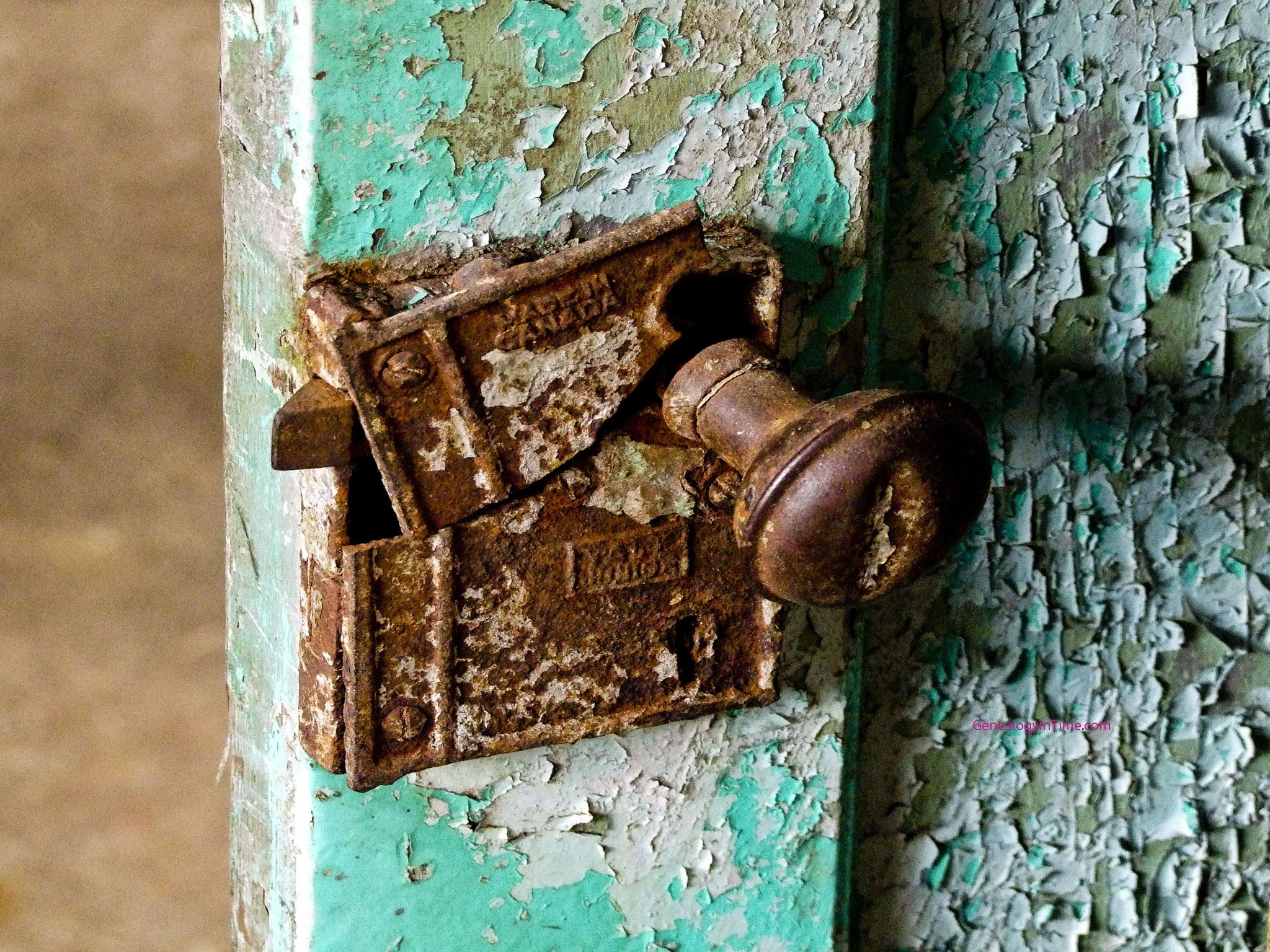
Unscrew the locks!
 Somewhere in the middle of his vast, joyous, brutal, democratic, and American poem, Walt Whitman said:
Unscrew the locks from the doors!
Unscrew the doors themselves from their jambs!
Whoever degrades another degrades me;
And whatever is done or said returns at last to me.
We are all here together for a time on this planet, and our lives affect each other. Facebook is the ubiquitous example of that. What we say, what we do, what we post, how we respond, how we don’t respond: these all illustrate our inescapably interwoven lives.
Old Walt’s poetry was a song for the removal of barriers between people, no matter how different, evil, good, hopeless, or rotten. He believed in the essential goodness of humans, yet was not surprised when he didn’t always find it.
To be in love with the world and unsurprised by its brutality at the same time . . . that is my wish for us all. Unscrew the locks from your doors and your hearts and see what happens.
A Lovely Thing

“Look for a lovely thing and you will find it,” Sara Teasdale said. Indeed. What you see is often not in what is actually there but in . . . what you see.
People are often aggravated by poetry because they “can’t see” what’s in it or they have been taught that they have to look for something in it. But really . . . “look for a lovely thing and you will find it.”
People who see evil in everything are no different from the people who see good in everything. Both can’t see the truth because they are too busy looking for it (or its opposite).
They both have sight corrupted by foresight. Instead, if we relied on insight more often, we would see more lovely things.
 Rural Oklahoma Museum of Poetry